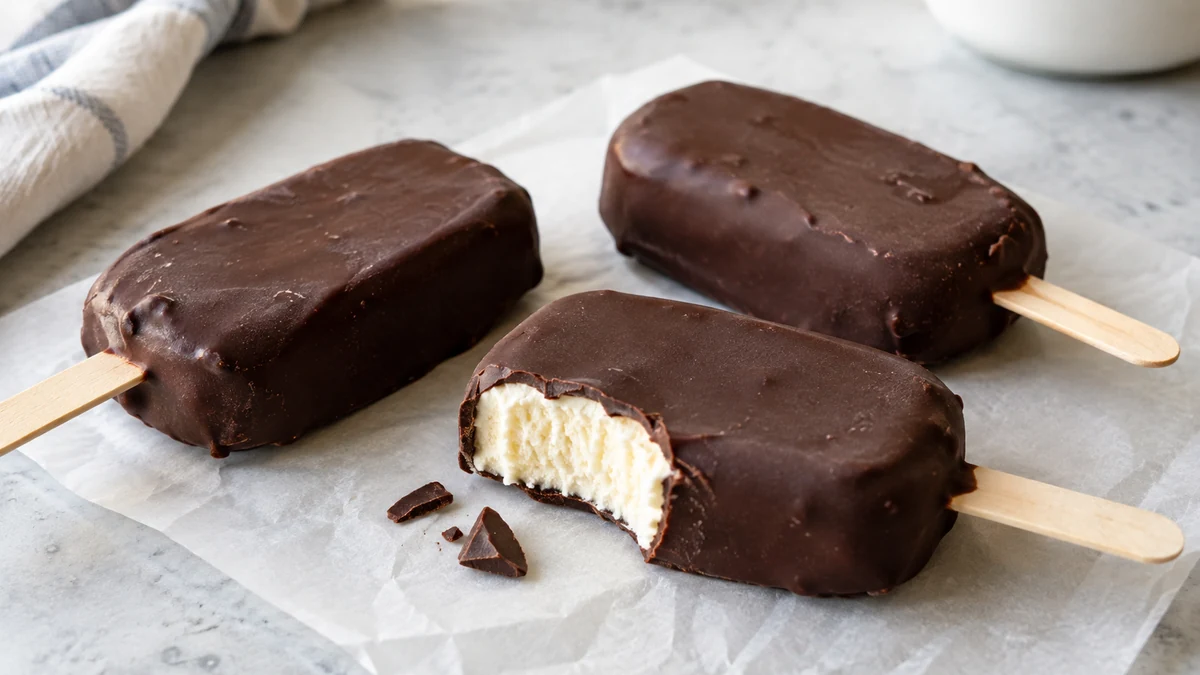
These keto ice cream bars combine a creamy vanilla-coconut center with a thin, crisp chocolate shell. You do not need an ice cream maker: whip the base, spoon it into silicone bar molds, freeze until solid, then dip each bar in melted sugar-free chocolate.
The method is built around texture rather than health claims. Heavy cream gives the center body, canned coconut milk keeps it smooth, and allulose provides sweetness without adding regular sugar. If you want more low-carb ideas after this frozen dessert, browse our Keto Recipes collection.
Table of Contents
Why You’ll Love These Keto Ice Cream Bars
No ice cream maker or cooked custard is required.
The recipe uses seven main ingredients plus salt and vanilla.
Whipping the cream before freezing gives the center a lighter texture.
Coconut oil thins the chocolate coating so it sets into a crisp shell instead of a thick layer.
The bars are portioned before freezing, so there is no scooping or tempering a whole container of ice cream.
They can be made ahead and kept individually wrapped in the freezer.
The recipe card includes a transparent nutrition estimate and explains why total carbohydrate can look different from a commonly calculated net-carb number when allulose and sugar alcohols are used.
Ingredients You’ll Need
Heavy Whipping Cream
Use cold heavy whipping cream so it can hold soft to medium peaks. That trapped air lightens the frozen center. Keep the cream refrigerated until you are ready to mix the base.
Full-Fat Canned Coconut Milk
Choose full-fat canned coconut milk, not the thinner refrigerated beverage sold in cartons. Stir the can until the thick cream and liquid are evenly combined before measuring. The extra fat helps the frozen base stay creamy enough to bite after a short rest at room temperature.
Allulose
Allulose is the default sweetener in this formula. If your allulose is coarse, pulse it briefly in a clean blender or spice grinder so it dissolves more easily. Other low-carb sweeteners can behave differently in frozen desserts, so changing the sweetener may change hardness, sweetness, and the nutrition estimate.
Vanilla and Salt
Vanilla gives the center a familiar ice-cream flavor, while a small amount of salt keeps the sweetness from tasting flat. Measure the salt rather than adding it by eye because the chocolate coating may already taste slightly salty depending on the brand.
Sugar-Free Dark Chocolate and Coconut Oil
Use a sugar-free dark chocolate baking chip that melts smoothly. Coconut oil loosens the melted chocolate so it can form a thin shell around a very cold bar. Chocolate formulas vary widely in fiber and sugar alcohols, so check the current package when you are tracking carbohydrates closely.
Creamy vanilla-coconut keto ice cream bars made without an ice cream maker and finished with a thin, crisp sugar-free dark chocolate shell.
Total Time:6 hours 55 minutes
Yield:8 bars
Ingredients
Scale
1 1/2 cups (357 g) cold heavy whipping cream
1 cup (240 g) full-fat canned coconut milk, well stirred
1/2 cup (100 g) allulose, powdered if coarse
2 teaspoons pure vanilla extract
1/4 teaspoon fine sea salt
5 ounces (140 g) sugar-free dark chocolate baking chips
2 tablespoons (28 g) refined coconut oil
Instructions
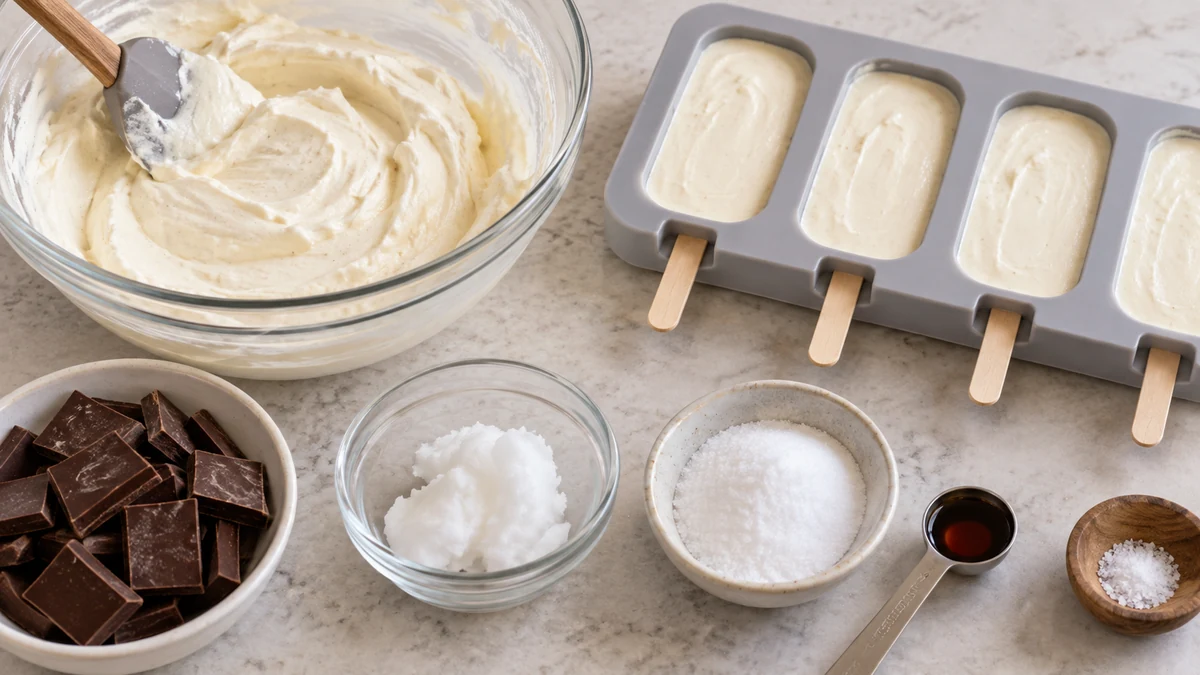
Add the cold heavy whipping cream to a large mixing bowl and beat with a hand mixer on medium speed until soft peaks form. With the mixer running, add the powdered allulose gradually, then add the vanilla and continue beating just until medium peaks form.
In a separate bowl, whisk the well-stirred canned coconut milk with the salt until smooth. Fold it into the whipped cream in three additions, stopping as soon as the mixture is evenly combined.
Spoon the mixture evenly into eight silicone ice cream bar or popsicle molds. Tap the mold gently on the counter to release large air pockets, level the tops, and insert the sticks.
Freeze for at least 6 hours, or overnight, until the bars are completely solid.
Unmold the frozen bars and arrange them on a parchment-lined tray. Return them to the freezer for 20 minutes while you prepare the coating.
Combine the sugar-free dark chocolate chips and coconut oil in a microwave-safe bowl or tall heatproof cup. Microwave in 20-second intervals, stirring after each, until almost melted. Stir until smooth, then cool for about 5 minutes so the coating is fluid but not hot.
Working with one bar at a time, dip the frozen bar into the chocolate and let the excess drip off. Place it on parchment and return it to the freezer. Repeat with the remaining bars, keeping the undipped bars frozen while you work.
Freeze the coated bars for 10 minutes, or until the shell is fully set. Let a bar stand at room temperature for 3 to 5 minutes before eating if your freezer keeps them very firm.
Notes
Use full-fat canned coconut milk, not refrigerated coconut milk beverage, for the intended texture.
Powder coarse allulose so it dissolves more easily in the cold cream.
Do not let water or condensation get into the chocolate; even a small amount can make melted chocolate seize.
Nutrition is an estimate per 1 of 8 bars. It uses USDA composition data for heavy cream, canned coconut milk, vanilla extract, and coconut oil; FDA guidance of 0.4 kcal per gram for allulose; and the current label for LILY’S Dark Chocolate Style Baking Chips as the representative sugar-free chocolate. Other chocolate brands can change calories, fiber, sugar alcohols, and total carbohydrate.
The listed total carbohydrate includes allulose and the carbohydrates declared on the chocolate label. Using the common low-carb subtraction method for fiber, allulose, and the representative chocolate’s labeled sugar alcohols gives about 3.5 g net carbs per bar under these assumptions; net carbs are not an FDA-defined Nutrition Facts line.
Store the finished bars wrapped in the freezer at 0°F (-18°C) or below. For best texture, use within a few weeks.
Author:Adam Moretti
Prep Time:20 minutes
Freezing Time:6 hours 30 minutes
Cook Time:5 minutes
Category:Dessert
Method:No-Cook
Cuisine:American
Diet:Keto
How to Make Keto Ice Cream Bars
1. Whip the Cream
Pour the cold heavy cream into a large mixing bowl and beat on medium speed until it reaches soft peaks. Add the powdered allulose gradually with the mixer running, then add the vanilla and continue beating just until medium peaks form and the whisk leaves defined trails. Stop there; overwhipping makes the mixture grainy and harder to fold.
2. Fold in the Coconut Milk
Whisk the well-stirred canned coconut milk with the salt in a separate bowl until smooth. Fold it into the whipped cream in three additions with a flexible spatula. Use broad strokes from the bottom of the bowl and stop as soon as the mixture looks even. The goal is to keep as much air in the base as possible.
3. Fill the Molds
Spoon the mixture into eight silicone ice cream bar or popsicle molds, leaving a little space at the top. Tap the mold gently on the counter to release large air pockets, level the tops, and insert the sticks. If your mold cavities are smaller, you may get more than eight bars.
4. Freeze Until Completely Solid
Freeze the filled molds for at least 6 hours, preferably overnight. The centers need to be firm before dipping; partially frozen bars can bend, slide off the sticks, or melt into the chocolate. Once unmolded, place the bars on a parchment-lined tray and return them to the freezer for 20 minutes while you prepare the coating.
5. Make the Chocolate Shell
Combine the sugar-free dark chocolate chips and coconut oil in a microwave-safe bowl or tall heatproof cup. Microwave in 20-second bursts, stirring after each interval, until almost melted. Stir until completely smooth, then let the coating stand for about 5 minutes so it is fluid but not hot.
6. Dip One Bar at a Time
Remove one frozen bar from the freezer, dip it into the chocolate, and let the excess drip back into the cup. The shell should begin setting within seconds. Place the coated bar on parchment and repeat with the remaining bars, keeping the rest frozen while you work. Freeze the dipped bars for another 10 minutes before serving or wrapping.
What the Finished Bars Should Look Like
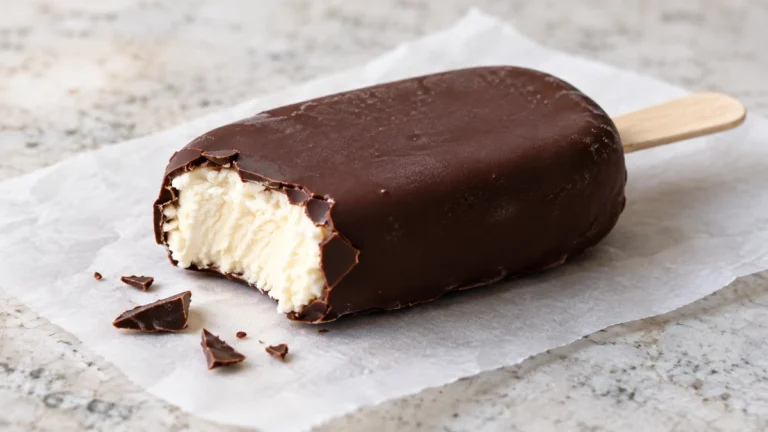
The vanilla center should be pale, smooth, and firm enough to hold the stick without bending.
The chocolate coating should be thin enough to crack cleanly when bitten rather than forming a thick candy block.
A bar taken directly from a very cold freezer may be firm; letting it stand for 3 to 5 minutes should make the center easier to bite.
The shell should stay attached to the bar. If it slides off in sheets, the bar was probably wet with frost or the coating was too warm.
Troubleshooting
The Centers Freeze Too Hard
First check the ingredients. Low-fat coconut milk, extra water, or a large sweetener substitution can change the freezing texture. Let the bars stand at room temperature for 3 to 5 minutes before eating. For the next batch, use full-fat canned coconut milk and keep the ingredient ratios unchanged.
The Base Feels Gritty
Coarse sweetener crystals may not dissolve completely in a cold mixture. Powder the allulose before mixing, and beat it into the cream long enough for the granules to disappear. Do not keep whipping after the cream reaches medium peaks.
The Bars Break During Unmolding
They may not be frozen solid yet. Give them more freezer time, then flex the silicone mold away from the bar instead of pulling hard on the stick. If needed, hold the outside of the mold in your hands for a few seconds; avoid prolonged warm water, which can melt the surface.
The Chocolate Coating Is Too Thick
Stir in an additional teaspoon of coconut oil while the chocolate is warm. A narrow, deeper cup also uses the coating more efficiently than a wide bowl because you can submerge the bar without making an extra-large batch.
The Chocolate Seizes
Water is usually the problem. Make sure the bowl, spoon, and measuring tools are completely dry, and do not let condensation from the frozen bars drip into the melted chocolate. Work with one bar at a time and keep the rest in the freezer.
Variations and Substitutions
Peppermint Chocolate
Replace 1/4 teaspoon of the vanilla with 1/8 teaspoon peppermint extract. Peppermint extract is strong, so start small rather than adding a full teaspoon.
Mocha Bars
Dissolve 1 teaspoon instant espresso powder in the coconut milk before folding it into the cream. This gives the center a mild coffee flavor without adding liquid.
Nut-Topped Chocolate Shell
Sprinkle finely chopped pecans or almonds over the shell immediately after dipping, before the chocolate sets. This changes the nutrition and allergen profile, so do not use the recipe card numbers for the nut-topped version.
Can I Make Them Dairy Free?
The default recipe is not dairy free because it uses heavy cream. Replacing the cream with a plant-based ingredient changes both aeration and freezing texture, so a one-for-one substitution is not guaranteed to behave the same way. If you need a dairy-free frozen dessert, use a formula developed specifically around coconut cream instead of treating the swap as identical.
For a savory menu before dessert, our keto appetizers give you measured party-friendly options. For more browseable recipe ideas across the site, see our quick and easy recipes.
Carbohydrates, Allulose, and the Nutrition Estimate
The nutrition numbers for these keto ice cream bars use USDA composition data for heavy cream, canned coconut milk, vanilla extract, and coconut oil; the current nutrition label for a representative sugar-free dark chocolate baking chip; and the FDA caloric factor for allulose. The FDA guidance on allulose labeling says allulose remains in Total Carbohydrate while manufacturers may exclude it from Total Sugars and Added Sugars, and may use 0.4 calories per gram for calorie calculations.
That labeling detail matters here. The recipe card shows about 24.7 grams of total carbohydrate per bar because it includes allulose and the carbohydrate declared on the sugar-free chocolate label. Using the common low-carb calculation that subtracts fiber, the allulose in this recipe, and the chocolate product’s labeled sugar alcohols gives roughly 3.5 grams per bar under the stated assumptions. “Net carbs” is not an FDA-defined Nutrition Facts line, and brands differ, so use the current labels on your own sweetener and chocolate if you track a specific target.
Make-Ahead and Freezer Storage
Once the chocolate shell is firm, wrap each bar in parchment or wax paper and place the wrapped bars in a freezer-safe container or zip-top bag. Store them in the coldest part of the freezer rather than the door, where temperature changes are more frequent. For best texture and flavor, use them within a few weeks.
The USDA recommends keeping a freezer at 0°F (-18°C) for frozen-food storage and notes that freezing keeps food safe for extended periods while quality can decline over time. See the USDA’s Freezing and Food Safety guidance for general freezer information. Avoid repeatedly softening and refreezing the same bars because the texture will become icier.
FAQ about Keto Ice Cream Bars
Do I need an ice cream maker for keto ice cream bars?
No. This recipe aerates the base by whipping the heavy cream, then freezes it directly in molds. The mold gives the dessert its shape, so churning is not required.
How long do keto ice cream bars need to freeze?
Plan on at least 6 hours before unmolding, and overnight is even more convenient. After unmolding, freeze the bare bars for another 20 minutes before dipping so the surface is very cold and firm.
Can I use erythritol instead of allulose?
You can experiment with another low-carb sweetener, but the texture may change. Erythritol-based blends can freeze harder or feel more crystalline in some frozen desserts. If you substitute, use a powdered product and expect to adjust sweetness to the manufacturer’s conversion guidance.
Why add coconut oil to the chocolate shell?
Coconut oil makes melted chocolate more fluid, so you can coat a frozen bar with a thinner layer. A thin coating cools quickly and gives the shell a cleaner snap.
Can I skip the chocolate coating?
Yes. Freeze and serve the vanilla-coconut bars without dipping them. They will taste milder and the nutrition will be different because the chocolate and coconut oil will be omitted.
What size molds work best?
Molds holding roughly 3 to 3 1/2 fluid ounces per cavity work well for an eight-bar yield. Smaller molds are fine; simply expect more bars and a shorter freezing time. Fill each cavity to the same level so the portions freeze at a similar rate.
Final Tips
For the cleanest keto ice cream bars, keep the cream cold, use full-fat canned coconut milk, powder coarse allulose, and freeze the centers completely before dipping. Melt the chocolate gently, let it cool for a few minutes, and work with one frozen bar at a time so the shell sets quickly instead of sliding off.
Once you have the basic method, change flavor with small additions such as espresso or peppermint rather than adding extra liquid. Keep the ingredient labels for your sweetener and chocolate nearby if you track carbohydrates, because those two products can change the nutrition more than the vanilla or salt. For more ideas after this recipe, browse all Healthy American Bites recipes.