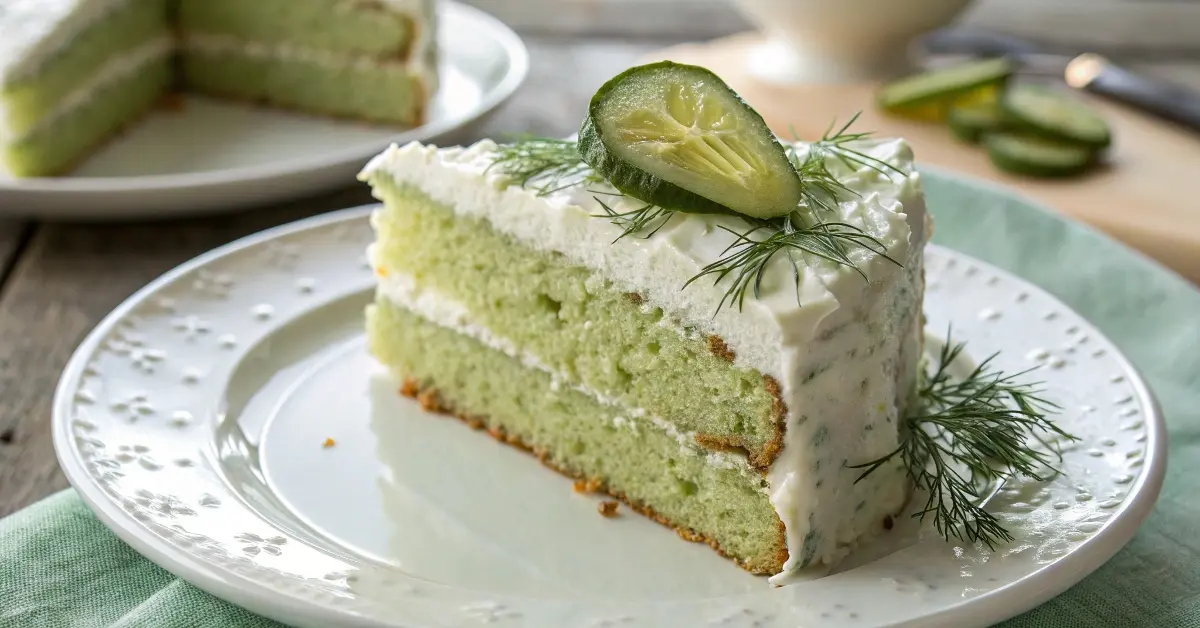
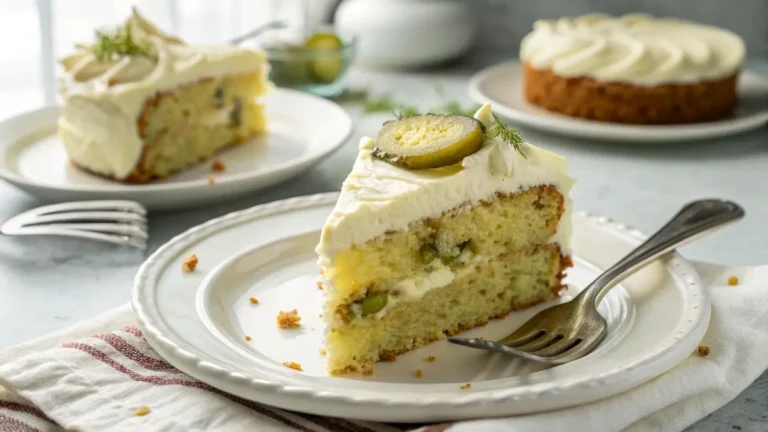
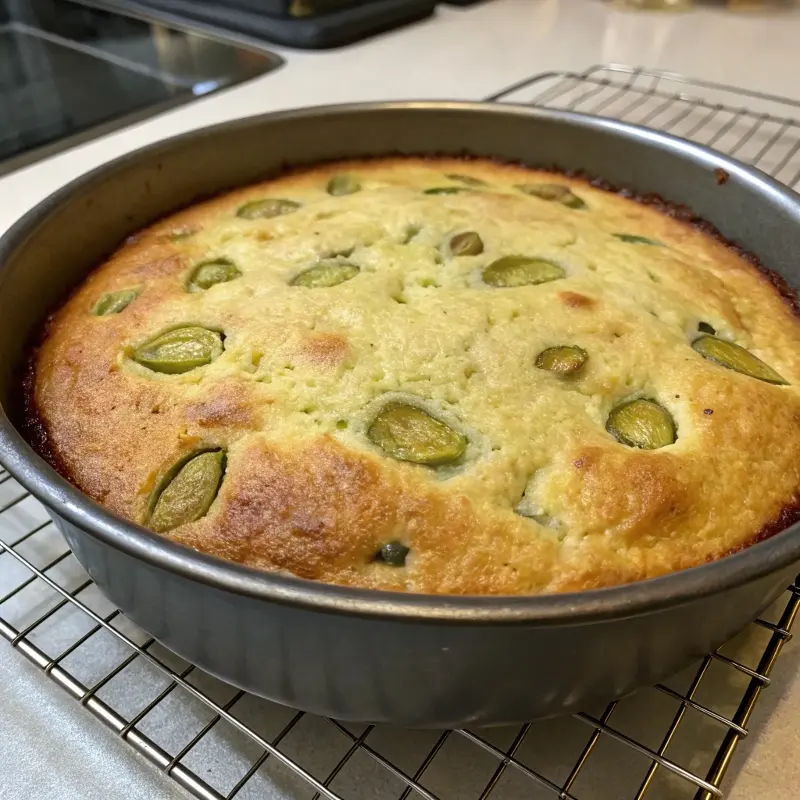
This pickle cake combines a soft vanilla cake with finely chopped dill pickles, a measured amount of pickle brine, and smooth cream cheese frosting. The result is sweet first, followed by a light salty-tangy finish rather than an overpowering vinegar flavor.
The recipe is baked as one 8-inch layer, so it is easier to assemble than a traditional layer cake. Careful draining keeps the pickle pieces from making the crumb wet, while sour cream helps the cake stay tender. It is an unusual dessert, but the method uses familiar cake-making steps and common grocery-store ingredients.
It has a recognizable dill pickle flavor without tasting like straight pickle juice.
The cake is baked in one round pan, with no stacking or complicated decorating.
Sour cream gives the crumb moisture and balances the salty brine.
The cream cheese frosting adds sweetness and a mild tang that works with the pickles.
You can bake the cake a day ahead and frost it before serving.
The same batter can be used to make 12 pickle cupcakes.
What Does Pickle Cake Taste Like?
Pickle cake tastes like a sweet vanilla snack cake with a gentle dill-pickle finish. The sugar, butter, and vanilla remain the dominant flavors, while the chopped pickles add small salty bites and the brine adds acidity.
It should not taste sharply vinegary. The key is to measure the brine, drain the chopped pickles thoroughly, and use regular dill pickles rather than adding extra juice by eye. Cream cheese frosting makes the contrast softer by adding a creamy, sweet layer.
This is still a dessert, not a savory bread. If you already enjoy sweet-and-salty combinations, the flavor will feel less surprising than the name suggests.
Ingredients You’ll Need
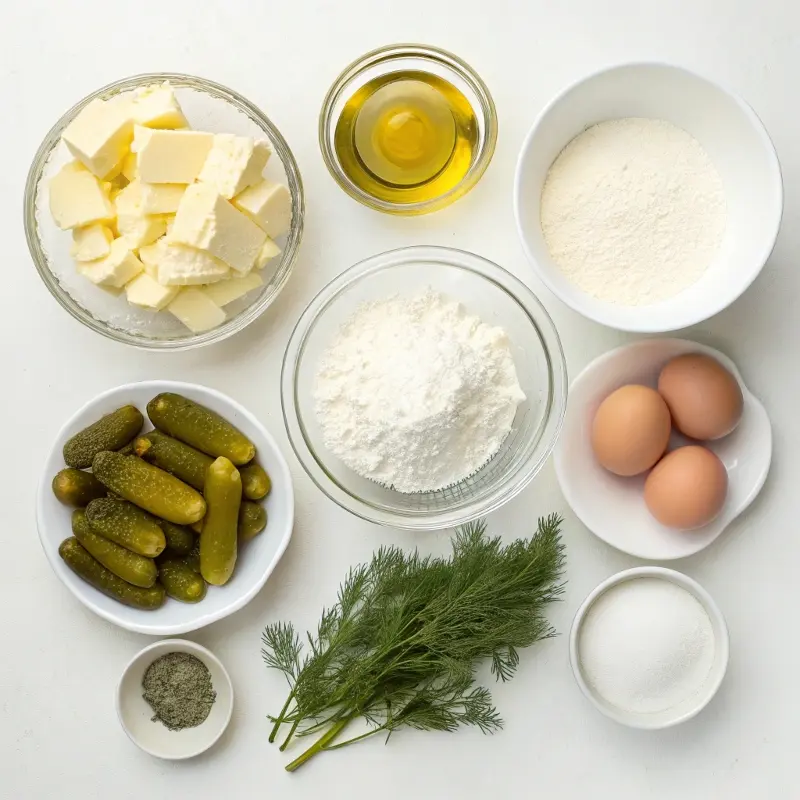
Dill Pickles
Use standard dill pickles with a clean garlic-and-dill flavor. Finely chop them, drain them well, and press them between paper towels before adding them to the batter. Large or wet pieces can create gummy pockets in the cake.
Bread-and-butter pickles can be used, but they make the cake sweeter and bring extra spices to the finished flavor. For the most predictable result, use dill pickles.
Pickle Brine
Use brine from the same jar as the pickles. Three tablespoons in the batter provide acidity and flavor without replacing too much of the cake’s moisture balance.
Pickle brands vary significantly in salt, vinegar, garlic, and sweetness. Taste the brine by itself before baking. If it is extremely salty or strongly flavored, use two tablespoons of brine plus one tablespoon of milk instead.
All-Purpose Flour
Measure the flour by weight when possible. If using cups, spoon the flour into the measuring cup and level it without packing. Too much flour can make a small single-layer cake dry and dense.
Butter and Sugar
Softened unsalted butter provides richness and lets you control the salt level. Creaming it with granulated sugar introduces air into the batter and helps the cake rise evenly.
Eggs and Sour Cream
Eggs provide structure, while full-fat sour cream adds moisture and a gentle tang. Room-temperature ingredients combine more smoothly than cold ingredients and reduce the chance of a curdled-looking batter.
Cream Cheese Frosting
The frosting uses cream cheese, butter, powdered sugar, vanilla, and a small amount of pickle brine. Add the brine gradually. Too much liquid can make cream cheese frosting loose, especially in a warm kitchen.
This soft pickle cake combines finely chopped dill pickles and pickle brine with a tender sour cream crumb and smooth cream cheese frosting. It is a sweet-and-tangy one-layer dessert that can also be made as 12 cupcakes.
Total Time:60 minutes
Yield:10 slices
Ingredients
Scale
Ingredients section: Pickle Cake
180 g (1 1/2 cups) all-purpose flour, spooned and leveled
1 teaspoon baking powder
1/2 teaspoon baking soda
1/4 teaspoon fine salt
113 g (1/2 cup) unsalted butter, softened
150 g (3/4 cup) granulated sugar
2 large eggs, at room temperature
120 g (1/2 cup) full-fat sour cream, at room temperature
3 tablespoons dill pickle brine from the jar
1 teaspoon vanilla extract
50 g (1/3 cup) finely chopped dill pickles, well drained and patted dry
Ingredients section: Cream Cheese Frosting
57 g (1/4 cup) unsalted butter, softened
113 g (4 ounces) full-fat block cream cheese, softened but still cool
180 g (1 1/2 cups) powdered sugar, sifted if lumpy
1/2 teaspoon vanilla extract
1 teaspoon dill pickle brine, plus up to 1 teaspoon more if needed
Fresh dill or one well-drained pickle chip for garnish, optional
Instructions
Preheat the oven to 350°F. Grease an 8-inch round cake pan, line the bottom with parchment paper, and lightly grease the parchment.
Finely chop the pickles, spread them on paper towels, and press gently to remove excess surface moisture.
Whisk the flour, baking powder, baking soda, and salt in a medium bowl.
In a large bowl, beat the softened butter and granulated sugar for 2 to 3 minutes, until lighter and slightly fluffy.
Beat in the eggs one at a time. Mix in the sour cream, 3 tablespoons pickle brine, and vanilla.
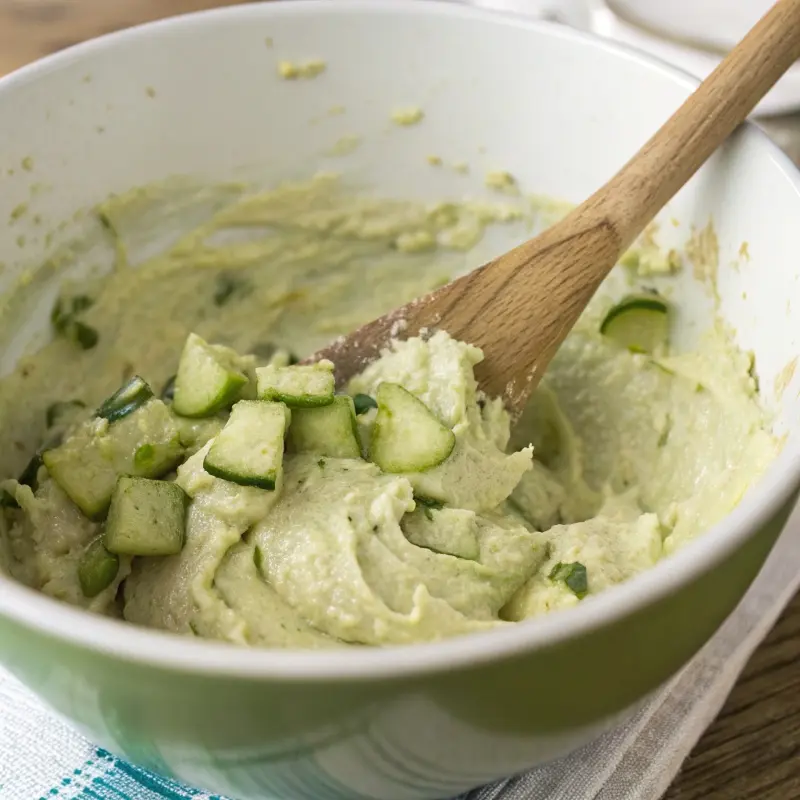
Add the dry ingredients and mix on low only until most of the flour disappears. Fold in the drained chopped pickles with a spatula.
Spread the batter evenly in the prepared pan. Bake for 32 to 36 minutes, until the center springs back lightly and a toothpick comes out clean or with a few moist crumbs.
Cool in the pan for 15 minutes. Turn the cake onto a wire rack, remove the parchment, and cool completely.
For the frosting, beat the softened butter until smooth. Add the cream cheese and beat just until combined. Gradually mix in the powdered sugar, then add the vanilla and 1 teaspoon pickle brine.
If the frosting is soft, chill it for 15 to 20 minutes. If it is too firm, mix in no more than 1 additional teaspoon of brine.
Frost the cooled cake. Add fresh dill or a well-drained pickle chip immediately before serving, if desired.
Notes
For a milder cake, replace 1 tablespoon of the batter’s pickle brine with 1 tablespoon of milk.
Pat the chopped pickles dry to prevent wet pockets in the cake.
For cupcakes, divide the batter among 12 lined muffin cups and bake for 18 to 22 minutes.
Refrigerate the cake after adding cream cheese frosting and do not leave it at room temperature for more than 2 hours.
Nutrition is an estimate and varies with the pickle, brine, and dairy brands used.
Author:Adam Moretti
Prep Time:25minutes
Cook Time:35 minutes
Category:Dessert
Method:Baking
Cuisine:American
Diet:Vegetarian
How to Make Pickle Cake
1. Prepare the Pan and Oven
Preheat the oven to 350°F. Grease an 8-inch round cake pan, line the bottom with parchment paper, and lightly grease the parchment. The lining makes it easier to remove the tender cake without breaking it.
2. Drain and Chop the Pickles
Finely chop the dill pickles. Place them on several layers of paper towel, cover them with another towel, and press gently to remove surface moisture. Do not crush the pieces into a paste.
3. Combine the Dry Ingredients
Whisk the flour, baking powder, baking soda, and salt in a medium bowl. Mixing the leaveners evenly into the flour helps prevent uneven rising or pockets with a bitter baking-soda taste.
4. Cream the Butter and Sugar
Beat the softened butter and granulated sugar for 2 to 3 minutes, until lighter in color and slightly fluffy. Scrape the bowl once or twice so no dense butter remains at the bottom.
5. Add the Eggs and Flavorings
Beat in the eggs one at a time. Mix in the sour cream, pickle brine, and vanilla. The mixture may look slightly separated after the brine is added; it should come together when the flour is incorporated.
6. Finish the Batter
Add the dry ingredients and mix on low speed just until most of the flour disappears. Fold in the drained chopped pickles with a spatula. Stop as soon as the batter is evenly combined. Overmixing can make the cake firm instead of tender.
7. Bake
Spread the batter evenly in the prepared pan. Bake for 32 to 36 minutes, or until the center springs back lightly and a toothpick inserted near the middle comes out clean or with a few moist crumbs.
Let the cake cool in the pan for 15 minutes. Run a thin knife around the edge, turn the cake onto a rack, remove the parchment, and let it cool completely before frosting.
8. Make the Cream Cheese Frosting
Beat the softened butter until smooth. Add the cream cheese and beat only until combined. Mix in the powdered sugar gradually, then add the vanilla and one teaspoon of pickle brine.
If the frosting is too soft to spread, refrigerate it for 15 to 20 minutes. If it is too firm, add no more than one additional teaspoon of brine.
9. Frost and Garnish
Spread the frosting over the top and sides of the completely cooled cake. Garnish with a small amount of fresh dill or one well-drained pickle chip immediately before serving, if desired.
Tips for the Best Texture and Flavor
Pat the Pickles Dry
Draining alone is not enough because moisture clings to the chopped pieces. Pressing them dry helps the pickles remain distributed in the crumb instead of forming wet spots.
Use Room-Temperature Ingredients
Butter should be soft enough to indent but not melted. Let the eggs and sour cream lose their refrigerator chill before mixing. Ingredients at similar temperatures form a smoother batter.
Do Not Pour in Extra Brine
More brine does not simply create more flavor. It also adds liquid, salt, and acid, which can change the rise and texture. Use a small amount in the frosting if you want a stronger finish without disturbing the cake batter.
Cool the Cake Completely
Even a slightly warm cake can melt cream cheese frosting. Cool it on a wire rack until the center is no longer warm before decorating.
Add Pickle Garnish at the Last Minute
A pickle slice can leak brine and discolor or soften the frosting. Blot it dry and place it on the cake shortly before serving rather than before refrigeration.
Troubleshooting
The Cake Is Dense
The batter may have been overmixed, the flour may have been packed into the measuring cup, or the baking powder may be old. Mix only until the flour disappears and check the expiration date on the leaveners.
The Center Is Wet
The chopped pickles may have carried too much liquid into the batter, or the cake may need several more minutes in the oven. Cover the top loosely with foil if it is browning before the center is done.
The Pickle Flavor Is Too Strong
Pickle brines differ by brand. On the next batch, replace one tablespoon of brine with one tablespoon of milk. Do not reduce the total liquid without replacing it.
The Pickle Flavor Is Too Mild
Use the full three tablespoons of brine in the batter and one to two teaspoons in the frosting. You can also add a few well-drained pickle pieces as a last-minute garnish, but avoid increasing the chopped pickles substantially because they add moisture.
The Frosting Is Runny
The butter or cream cheese may have been too warm, or too much brine may have been added. Chill the frosting for 15 to 20 minutes before spreading. Adding large amounts of extra powdered sugar will make it much sweeter.
Variations
Pickle Cupcakes
Divide the batter among 12 lined muffin cups, filling each about two-thirds full. Bake at 350°F for 18 to 22 minutes. Cool completely before frosting.
Lightly Frosted Snack Cake
Bake the batter in an 8-inch square pan and spread the frosting only over the top. Begin checking for doneness at 30 minutes because pan material and shape affect baking time.
Milder Pickle Cake
Use two tablespoons of pickle brine plus one tablespoon of milk in the batter. Keep the chopped pickles at one-third cup so the cake still has recognizable pickle flavor.
Extra Dill Finish
Add one teaspoon of finely chopped fresh dill to the frosting or sprinkle a small amount on top. Do not add a large handful; fresh dill can quickly dominate the vanilla and cream cheese flavors.
Make-Ahead and Storage
The unfrosted cake can be baked one day ahead. Once completely cool, wrap it tightly and keep it at room temperature until you are ready to frost it.
After adding cream cheese frosting, cover and refrigerate the cake. For the best texture, serve it within four days and let individual slices stand at room temperature for about 15 minutes before eating.
Do not leave a cream-cheese-frosted cake at room temperature for more than two hours. This follows USDA refrigeration guidance for perishable foods.
To freeze the unfrosted cake, wrap it tightly in plastic wrap and place it in a freezer-safe container for up to two months. Thaw it, still wrapped, in the refrigerator overnight. Frost it after it has thawed completely.
Frequently Asked Questions
What is pickle cake?
Pickle cake is a sweet cake flavored with chopped pickles and a controlled amount of pickle brine. This version uses dill pickles, sour cream, vanilla, and cream cheese frosting to balance sweet, salty, and tangy flavors.
Does pickle cake really taste like pickles?
Yes, but the flavor should be gentle. You taste vanilla cake and sweet cream cheese frosting first, followed by dill, salt, and acidity from the pickles. It should not taste like drinking brine directly from the jar.
Which pickles are best for pickle cake?
Standard dill pickles provide the most predictable balance. Bread-and-butter pickles produce a sweeter, more heavily spiced cake. Avoid very hot or strongly garlic-flavored pickles unless you intentionally want those flavors in the dessert.
Can I make pickle cake from a boxed cake mix?
A boxed mix can be adapted, but replacing its liquid with brine changes the formula and the required amount depends on the brand. The from-scratch recipe here gives you measured quantities for the pickle pieces, brine, leaveners, and sour cream.
Can I turn this recipe into pickle cupcakes?
Yes. Divide the batter among 12 lined muffin cups and bake at 350°F for 18 to 22 minutes. Begin checking at 18 minutes and cool the cupcakes fully before frosting.
Does pickle cake need to be refrigerated?
The unfrosted cake can stay covered at room temperature for one day. Once it has cream cheese frosting, keep it covered in the refrigerator and do not leave it at room temperature for more than two hours.
Can I make the cake ahead?
Yes. Bake the cake one day ahead, cool it completely, wrap it tightly, and frost it the next day. You can also prepare the frosting ahead and refrigerate it, then let it soften briefly before spreading.
Final Tips
The best pickle cake depends on balance. Finely chop and thoroughly dry the pickles, measure the brine instead of pouring freely, and stop mixing as soon as the batter comes together. Let the cake cool completely before adding the frosting.
For the first batch, use standard dill pickles and keep the garnish simple. The finished cake should still feel like dessert: soft vanilla crumb, creamy frosting, and a noticeable but controlled pickle finish.
Reviewed recipe options
Make this recipe fit me
Choose one of seven popular diet options. NutriMatch will confirm whether the recipe already fits, show a reviewed adaptation when available, or recommend recipes that match your choice.
Please choose a diet first.
Reviewed Dairy-Free adaptation
Dairy-Free Pickle Cake
Use the reviewed substitutions below to prepare a Dairy-Free version while keeping the original recipe's basic method.
Ingredient swaps
113 g (1/2 cup) unsalted butter, softenedUse 113 g (1/2 cup) firm plant-based baking butter, softened
120 g (1/2 cup) full-fat sour cream, at room temperatureUse 120 g (1/2 cup) unsweetened dairy-free sour cream, at room temperature
57 g (1/4 cup) unsalted butter, softenedUse 57 g (1/4 cup) firm plant-based baking butter, softened
113 g (4 ounces) full-fat block cream cheese, softened but still coolUse 113 g (4 ounces) firm dairy-free cream-cheese alternative, softened but still cool
Instruction changes
Use firm plant butter rather than a tub spread and cool the cake fully before adding dairy-free frosting.
Check: Check every packaged substitute, seasoning, sauce, and topping for milk ingredients and the cross-contact information you need.
Use these reviewed changes with the original ingredient quantities and instructions above. The original recipe card stays unchanged.
Recipe details, product formulas, and cross-contact information can change. Confirm current labels and use professional guidance when medically necessary.
Reviewed Gluten-Free adaptation
Gluten-Free Pickle Cake
Use the reviewed substitutions below to prepare a Gluten-Free version while keeping the original recipe's basic method.
Ingredient swaps
180 g (1 1/2 cups) all-purpose flour, spooned and leveledUse 180 g (1 1/2 cups) gluten-free 1-to-1 baking flour with xanthan gum, spooned and leveled
Instruction changes
Mix only until combined and begin checking the cake at the earliest original bake time.
Check: Use products labeled gluten-free when needed and check sauces, seasonings, baking ingredients, and shared equipment for cross-contact.
Use these reviewed changes with the original ingredient quantities and instructions above. The original recipe card stays unchanged.
Recipe details, product formulas, and cross-contact information can change. Confirm current labels and use professional guidance when medically necessary.
Not available for this recipe
This recipe cannot currently be made High Protein with a reviewed adaptation.
NutriMatch will not guess at substitutions. Try one of these recipes that is already reviewed for your choice.
Recipe details, product formulas, and cross-contact information can change. Confirm current labels and use professional guidance when medically necessary.
Not available for this recipe
This recipe cannot currently be made Keto with a reviewed adaptation.
NutriMatch will not guess at substitutions. Try one of these recipes that is already reviewed for your choice.
Recipe details, product formulas, and cross-contact information can change. Confirm current labels and use professional guidance when medically necessary.
Not available for this recipe
This recipe cannot currently be made Low Carb with a reviewed adaptation.
NutriMatch will not guess at substitutions. Try one of these recipes that is already reviewed for your choice.
Recipe details, product formulas, and cross-contact information can change. Confirm current labels and use professional guidance when medically necessary.
Reviewed Vegan adaptation
Vegan Pickle Cake
Use the reviewed substitutions below to prepare a Vegan version while keeping the original recipe's basic method.
Ingredient swaps
113 g (1/2 cup) unsalted butter, softenedUse 113 g (1/2 cup) firm vegan baking butter, softened
2 large eggs, at room temperatureUse 2 flax eggs (2 tablespoons ground flaxseed mixed with 5 tablespoons water), rested 10 minutes
120 g (1/2 cup) full-fat sour cream, at room temperatureUse 120 g (1/2 cup) unsweetened vegan sour cream, at room temperature
57 g (1/4 cup) unsalted butter, softenedUse 57 g (1/4 cup) firm vegan baking butter, softened
113 g (4 ounces) full-fat block cream cheese, softened but still coolUse 113 g (4 ounces) firm vegan cream-cheese alternative, softened but still cool
Instruction changes
Rest the flax eggs for 10 minutes, mix them with the wet ingredients, and allow the cake to cool completely before slicing.
Check: Confirm every packaged substitute, sauce, seasoning, and topping is vegan; product formulas and processing aids can vary.
Use these reviewed changes with the original ingredient quantities and instructions above. The original recipe card stays unchanged.
Recipe details, product formulas, and cross-contact information can change. Confirm current labels and use professional guidance when medically necessary.
Already a reviewed match
This recipe already fits Vegetarian.
No changes are needed based on its reviewed NutriMatch classification. Check the complete ingredients, product labels, and serving details for your own needs.
Recipe details, product formulas, and cross-contact information can change. Confirm current labels and use professional guidance when medically necessary.