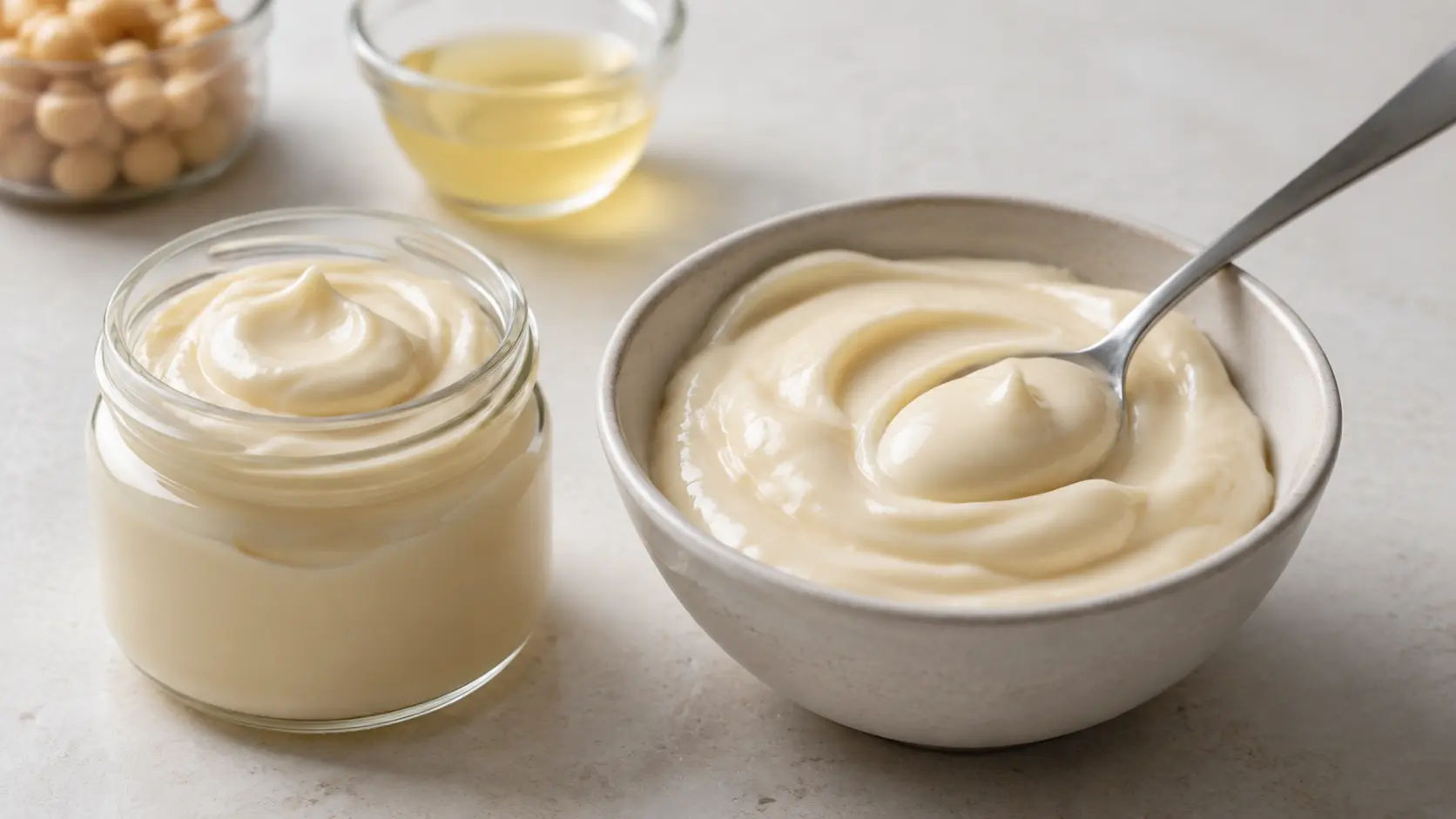
This vegan mayo recipe turns aquafaba, neutral oil, vinegar, Dijon mustard, and salt into a thick, creamy spread in about five minutes. It is completely egg-free and dairy-free, with a mild flavor that works in sandwiches, salads, dips, and dressings.
The key is to begin with room-temperature ingredients, use a tall narrow container, and add the oil slowly while blending. Once you understand those three details, the emulsion is simple to make and easy to adjust. For more plant-based meal ideas, explore these vegan crockpot recipes.
Table of Contents
Why You’ll Love This Vegan Mayo Recipe
It takes about five minutes from start to finish.
Aquafaba replaces the egg without making the mayo taste like chickpeas.
The texture is thick enough for sandwiches, potato salad, and creamy dips.
You need only five everyday ingredients.
The salt, acidity, and thickness are easy to adjust.
It is naturally vegan, egg-free, and dairy-free.
It can be gluten-free when every packaged ingredient is verified.
What Is Aquafaba Mayo?
Aquafaba is the liquid found in a can of chickpeas. It contains starches and proteins that can trap air and help oil and water stay combined. In this recipe, it performs the emulsifying role that egg normally plays in traditional mayonnaise.
Canned aquafaba is the most dependable choice because its concentration is usually more consistent than homemade chickpea cooking liquid. Choose plain or low-sodium chickpeas when possible, then measure the liquid after opening the can. The finished mayo should taste tangy and neutral rather than strongly of chickpeas.
Ingredients You’ll Need
Aquafaba
Use 1/4 cup of room-temperature liquid drained from a can of chickpeas. Avoid aquafaba that is heavily salted or flavored. If the liquid is unusually watery, the mayo may need one or two extra tablespoons of oil to thicken.
Neutral Oil
Use 3/4 cup of canola, sunflower, grapeseed, or refined avocado oil. A neutral-tasting oil lets the vinegar and Dijon provide the flavor. Extra-virgin olive oil can become bitter when blended vigorously, so it is not the best choice here.
Apple Cider Vinegar or Lemon Juice
One tablespoon adds the acidity mayonnaise needs. Apple cider vinegar creates a rounded tang, while fresh lemon juice tastes brighter. Either one works.
Dijon Mustard
One teaspoon adds gentle sharpness and helps support the emulsion. Check the label if you need the finished mayo to meet a specific dietary requirement.
Fine Salt
Start with 1/4 teaspoon, then taste after blending. The amount needed can change depending on whether the aquafaba came from regular or low-sodium chickpeas.
Equipment
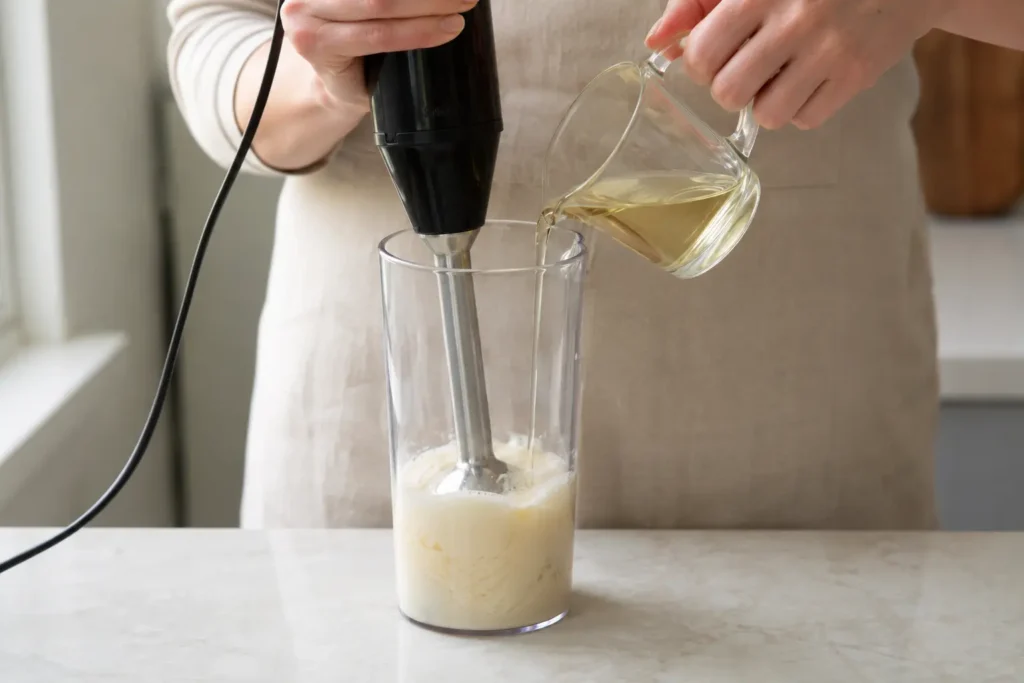
An immersion blender and a tall narrow jar give the most reliable result. The container should be only slightly wider than the blender head so the ingredients circulate through the blade instead of spreading across a wide bowl.
A small measuring jug with a pouring spout makes it easier to add the oil in a thin stream. You will also need measuring spoons and a clean airtight jar for storage.
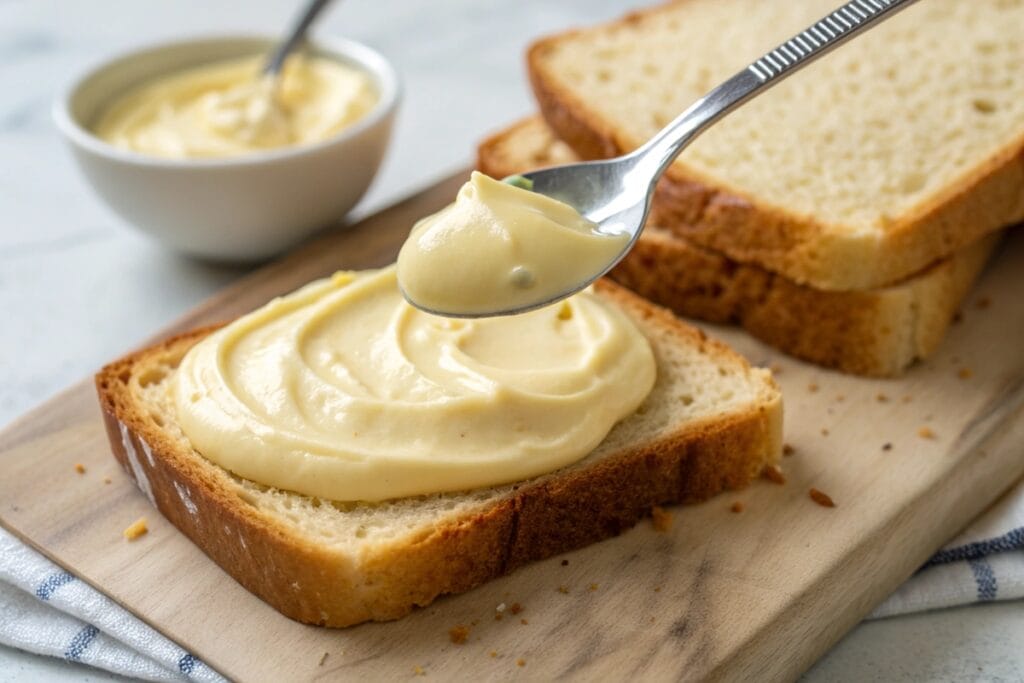
Thick, creamy vegan mayonnaise made with aquafaba, neutral oil, vinegar, Dijon mustard, and salt in about five minutes.
Total Time:35 minutes
Yield:1 cup (16 tablespoons)
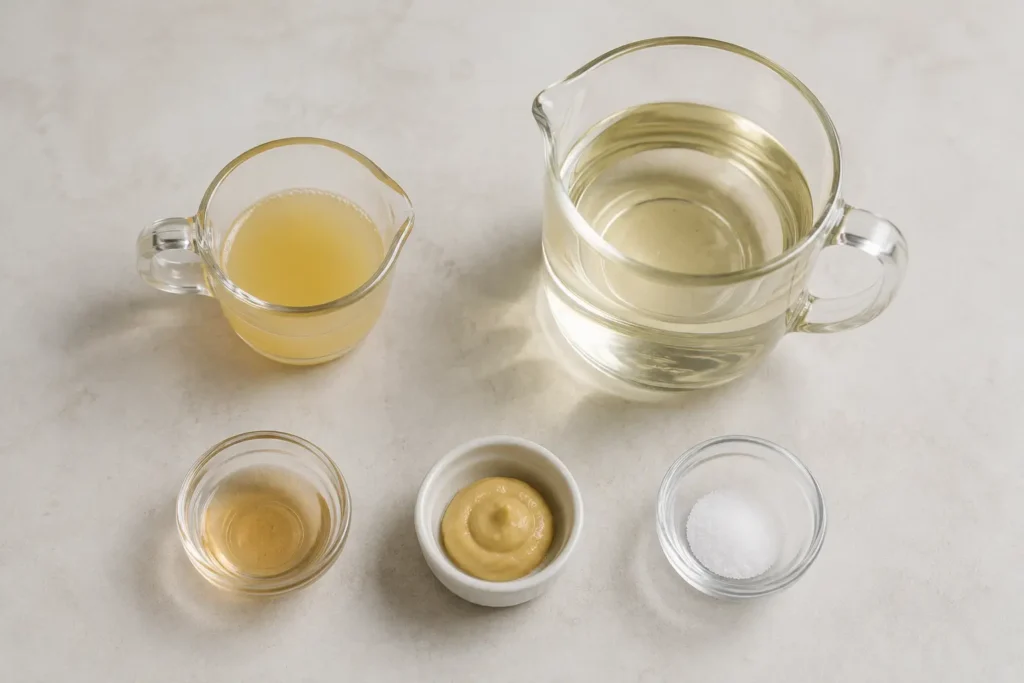
Ingredients
Scale
1/4 cup (60 ml) aquafaba from canned chickpeas, room temperature
1 tablespoon apple cider vinegar or fresh lemon juice
1 teaspoon Dijon mustard
1/4 teaspoon fine salt, plus more to taste
3/4 cup (180 ml) neutral oil, such as canola, sunflower, grapeseed, or refined avocado oil
Optional: 1 to 2 tablespoons additional neutral oil, if needed for thickening
Instructions
Add the aquafaba, vinegar or lemon juice, Dijon mustard, and salt to a tall narrow blending jar.
Place an immersion blender at the bottom of the jar and blend for 20 to 30 seconds, until the mixture is pale and foamy.
Keep blending on low while pouring in the oil in a very thin, steady stream. Keep the blade near the bottom until the mixture begins to thicken.
Move the blender gently up and down to incorporate the remaining oil. Stop when the mayo is smooth and holds a soft peak.
Taste and adjust the salt or acid. For thicker mayo, blend in additional oil one tablespoon at a time. For thinner mayo, blend in cold water one teaspoon at a time.
Transfer to a clean airtight jar and refrigerate for 30 minutes before serving.
Notes
Canned aquafaba gives more consistent results than homemade chickpea cooking liquid.
Use room-temperature ingredients and a jar only slightly wider than the immersion blender head.
If the mayo separates, blend 1 tablespoon fresh aquafaba in a clean jar and slowly blend the broken mayo into it.
Refrigerate at 40°F (4°C) or below and use within 3 to 4 days.
Author:Adam Moretti
Prep Time:5 minutes
Chilling Time:30 minutes
Cook Time:0 minutes
Category:Condiment
Method:Blending, No-cook
Cuisine:American
Diet:Vegan
How to Make Vegan Mayo
1. Combine the Base Ingredients
Add the aquafaba, apple cider vinegar or lemon juice, Dijon mustard, and salt to a tall narrow blending jar. Make sure all the ingredients are close to room temperature.
2. Blend Until Foamy
Place the immersion blender at the bottom of the jar and blend for 20 to 30 seconds. The mixture should become pale and foamy before you begin adding oil.
3. Add the Oil Slowly
Keep the blender running on low and pour in the neutral oil in a very thin, steady stream. Keep the blade near the bottom at first. The mixture should begin to turn opaque and creamy as the oil is incorporated.
4. Finish the Emulsion
Once the bottom of the mixture is thick, move the blender gently up and down to incorporate the remaining oil. Stop blending as soon as the mayo looks smooth and holds a soft peak. Overworking it can warm the mixture and make it less stable.
5. Adjust the Texture and Flavor
Taste the mayo and add a little more salt or acid if needed. If it is thinner than you want, blend in additional neutral oil one tablespoon at a time. If it is too thick, blend in cold water one teaspoon at a time.
6. Chill Before Serving
Transfer the mayo to a clean airtight jar and refrigerate it for 30 minutes. Chilling helps the texture settle and gives the flavors time to blend.
Why This Method Works
Aquafaba supplies the proteins and starches needed to build an emulsion. Dijon mustard gives that emulsion additional support, while the acid balances the oil and produces the familiar tang of mayonnaise.
Adding the oil slowly matters because the aquafaba can hold only a limited amount at one time. A thin stream breaks the oil into tiny droplets that can remain suspended throughout the mixture. Room-temperature ingredients combine more predictably than ingredients with a large temperature difference.
Troubleshooting Vegan Mayo
The Mayo Is Too Thin
Continue blending and add neutral oil one tablespoon at a time. Oil may seem like an unusual fix for thin mayo, but a properly forming emulsion becomes thicker as more oil is incorporated. Also check that you used a tall, narrow container rather than a wide bowl.
The Mayo Separated While Blending
The oil was probably added too quickly or the ingredients were at very different temperatures. Place one tablespoon of fresh aquafaba in a clean narrow jar, blend until foamy, and slowly blend the separated mixture into it as though it were the oil.
The Mayo Tastes Bitter
Strong extra-virgin olive oil can develop a bitter flavor when processed with a high-speed blade. Use canola, sunflower, grapeseed, or refined avocado oil for a more neutral result.
The Mayo Tastes Too Much Like Chickpeas
Add another teaspoon of lemon juice or vinegar and a small pinch of salt. Chilling the mayo for 30 minutes also softens the chickpea flavor. Next time, use aquafaba from low-sodium canned chickpeas.
The Mayo Is Too Thick
Blend in cold water one teaspoon at a time until the mayo reaches the consistency you want. Add it gradually so the emulsion does not become runny.
Flavor Variations
Garlic Mayo
Blend in one small grated garlic clove after the mayo has emulsified. Chill for at least 30 minutes before serving so the garlic flavor can develop.
Sriracha Mayo
Stir in one to two teaspoons of sriracha. Add it gradually because too much additional liquid can loosen the mayo.
Lemon Herb Mayo
Fold in one teaspoon of lemon zest and one tablespoon of finely chopped chives, parsley, or dill. Add fresh herbs only after blending.
Smoky Mayo
Mix in 1/4 teaspoon smoked paprika and a small pinch of garlic powder. Taste before adding more because both flavors intensify while the mayo chills.
Basil Mayo
Stir in a small pinch of homemade basil salt after emulsifying, then reduce or omit the plain salt to avoid overseasoning.
Ways to Use Vegan Mayo
Spread it on sandwiches, burgers, wraps, and toast. It also works as a base for coleslaw dressing, chickpea salad, pasta salad, ranch-style dip, and creamy sauces.
For a plant-based potato salad, use this mayo in place of the standard mayonnaise in our Hellmann’s potato salad recipe, omit the eggs, and verify the remaining ingredients. If you are planning meals for someone avoiding gluten, our gluten-free recipes guide has more ideas, but always check the current labels on Dijon, vinegar, and other packaged products.
Storage and Food Safety
Transfer the mayo to a clean airtight jar immediately after making it. Refrigerate at 40°F (4°C) or below and use it within 3 to 4 days. This conservative window aligns with the USDA recommendation for refrigerated leftovers. See the USDA guidance on handling leftovers safely.
Use a clean spoon each time so crumbs and other food do not enter the jar. Do not leave the mayo at room temperature for more than two hours, or more than one hour when the temperature is above 90°F (32°C). Discard it if you notice mold, an unusual odor, or other signs of spoilage.
Freezing is not recommended because the emulsion may split after thawing. If the refrigerated mayo separates slightly but still falls within the safe storage window and shows no signs of spoilage, whisk or briefly reblend it before serving.
Frequently Asked Questions
Can I use homemade chickpea cooking liquid?
Yes, but its concentration varies. Simmer watery cooking liquid until it has a consistency similar to lightly beaten egg whites, then cool it completely before measuring. Canned aquafaba usually gives more repeatable results.
Does aquafaba mayo taste like chickpeas?
The freshly blended mayo may have a faint chickpea note, but vinegar or lemon, Dijon, salt, and chilling make the final flavor much more neutral.
Can I make vegan mayo in a regular blender?
Yes. Blend the aquafaba base first, then run the blender on low while adding the oil through the lid opening in the thinnest possible stream. A food processor can work the same way. An immersion blender in a narrow jar is easier for this small batch.
Why did my vegan mayo not thicken?
The oil may have been added too quickly, the container may have been too wide, or the aquafaba may have been unusually watery. Keep blending while adding oil one tablespoon at a time, or restart the emulsion with one tablespoon of fresh aquafaba.
What is the best oil for vegan mayo?
Canola, sunflower, grapeseed, and refined avocado oil all have a neutral flavor. Avoid strongly flavored or unrefined oils unless you want their taste to dominate the finished mayo.
Is this vegan mayo gluten free?
The basic ingredients do not normally contain gluten, but packaged products and manufacturing conditions vary. Check the current labels on the aquafaba, Dijon mustard, vinegar, and oil when gluten cross-contact is a concern.
Can I freeze aquafaba mayo?
Freezing is not recommended. The texture can become grainy or separated after thawing, so a small fresh batch is the better option.
How long does homemade vegan mayo last?
Store it in a clean airtight jar in the refrigerator and use it within 3 to 4 days. Discard it earlier if it develops mold, an unusual smell, or other signs of spoilage.
Final Tips
Use room-temperature ingredients, a tall narrow jar, and a thin stream of oil for the most dependable emulsion. Blend the aquafaba base until foamy before adding oil, then stop once the mayo is thick and smooth.
Taste only after the emulsion forms. A little extra acid brightens the flavor, extra oil thickens it, and a teaspoon of water loosens it. With those adjustments, this simple vegan mayo recipe can become a sandwich spread, salad dressing base, dip, or creamy sauce in about five minutes.